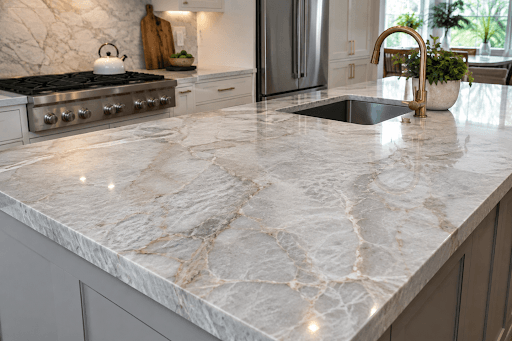
Why Are Quartzite Countertops So Popular?
If you’re comparing natural stone options for a kitchen or bathroom, quartzite countertops are worth considering. Blue Sky Granite & Marble offers natural stone countertop solutions for homeowners who want a combination of visual appeal and everyday performance.
Quartzite is a naturally occurring metamorphic rock formed when quartz-rich sandstone is subjected to heat and pressure. Unlike engineered quartz, which is manufactured from crushed quartz and binding materials, quartzite is quarried as natural stone.
That distinction gives every slab its own characteristics. Veining, movement, color variations, and patterns can differ significantly from one slab to another, making slab selection an important part of the design process.
Is Quartzite Durable Enough for a Busy Kitchen?
One of quartzite’s biggest advantages is its hardness. Pure quartzite is primarily composed of quartz, which has a Mohs hardness of approximately 7. For comparison, calcite—the primary mineral in marble—ranks around 3 on the same scale.
This hardness makes quality quartzite a strong option for surfaces that receive frequent everyday use.
However, “durable” does not mean indestructible. Quartzite can still chip at vulnerable edges or experience damage from heavy impact. Proper fabrication, installation, and reasonable care remain important.
Homeowners should also make sure they are purchasing genuine quartzite rather than a similarly marketed stone. Some natural stones sold under quartzite-related names may have different performance characteristics.
Does Quartzite Need Sealing?
Yes, many quartzite countertops benefit from professional sealing.
Natural stone can have varying degrees of porosity depending on its mineral composition. A suitable sealer can help reduce the absorption of liquids and make routine maintenance easier.
The frequency of resealing depends on the specific stone, sealer, and amount of use. Rather than following a universal calendar, homeowners should ask their stone professional what maintenance schedule is appropriate for the selected slab.
Daily cleaning is generally straightforward. Use a soft cloth or sponge with a stone-safe cleaner, and avoid harsh chemicals or abrasive products that could affect the finish or sealer.
What Colors and Styles Are Available?
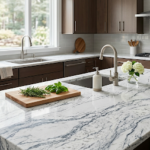
One reason homeowners choose quartzite is its ability to provide a natural-stone appearance with substantial visual movement.
Depending on the variety, quartzite can feature:
- White or off-white backgrounds
- Gray veining
- Beige and cream tones
- Green, blue, or dramatic accent colors
- Bold patterns resembling marble
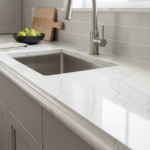
- Subtle movement for a cleaner appearance
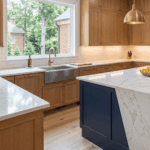
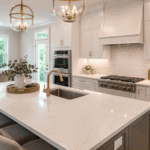
This makes quartzite adaptable to many kitchen styles. A dramatic slab can become the focal point of a minimalist kitchen, while a softer pattern can complement traditional cabinetry.
Because natural stone varies, it is a good idea to view the actual slab before making a final selection whenever possible. Small samples cannot always communicate the full movement of a large slab.
Is Quartzite Better Than Quartz?
Neither material is automatically better; they serve different preferences.
Quartz is engineered, allowing manufacturers to produce highly consistent colors and patterns. It also offers a broad range of design choices.
Quartzite is a natural stone, so its appearance is naturally variable. Homeowners who appreciate unique veining and the character of quarried stone may prefer it.
Maintenance expectations can also differ. Quartzite generally requires more attention to sealing and stone-safe cleaning, while engineered quartz typically requires less maintenance.
The right choice depends on your priorities, including appearance, maintenance, budget, and how the countertop will be used.
How Much Maintenance Does Quartzite Require?
Quartzite is relatively manageable when properly cared for, but homeowners should treat it as natural stone.
Simple habits can help preserve the surface:
- Wipe spills promptly.
- Use cutting boards rather than cutting directly on the countertop.
- Use trivets under very hot cookware.
- Avoid abrasive cleaners.
- Follow the fabricator’s recommendations for sealing and maintenance.
- Use products specifically intended for natural stone.
These steps can help protect both the stone and its finish over time.
Why Does Professional Slab Selection Matter?
Countertops are not just functional surfaces—they occupy a significant visual area of a kitchen or bathroom. With quartzite, the slab’s natural pattern can influence the entire room.
Professional countertop specialists can help homeowners evaluate the stone’s color, movement, thickness, edge profile, and how seams may appear after installation. They can also help coordinate the countertop with cabinetry, backsplash materials, flooring, and fixtures.
This planning is particularly important when selecting a heavily veined slab. The placement and orientation of the stone can dramatically change how the finished countertop looks.
Is Quartzite a Good Investment for an Atlanta Kitchen?
For homeowners who want the natural character of stone combined with strong everyday performance, quartzite can be an excellent countertop option. Its distinctive appearance can create a high-end focal point while its hardness makes it suitable for many kitchens and bathrooms.
If you’re researching quartzite countertops in Atlanta, GA, Blue Sky Granite & Marble can help you explore natural stone options for your remodeling project. Visit the showroom at 3109 Moon Station Rd, Kennesaw, GA, or call (770) 970-0950 to discuss slab selection, countertop design, and installation. Whether you’re updating a kitchen in Atlanta, Kennesaw, Marietta, Roswell, or a nearby Georgia community, contact Blue Sky Granite & Marble to start planning a countertop that fits your style and everyday needs.