By Sara Lombera
When choosing a countertop, homeowners often focus on color and pattern before considering the edge profile. But the edge is among the details you see and touch most often. It frames cabinet fronts, catches light, and helps determine whether the room feels streamlined or more detailed. Choosing an edge is easier when you consider the room, the material, and the practical ways people use the counter.
Begin with the overall style
A clean, straight-profile edge often complements a contemporary kitchen. A gently rounded profile can soften the appearance, while a more elaborate shape may reinforce traditional cabinet details. These are visual directions, not rigid rules. Bring a cabinet-door sample or photographs of the finished room to compare possible profiles against the actual design.
Think about which edges are most prominent. An island may be visible from every direction, while a back-wall run is largely framed by cabinetry and the backsplash. Using a consistent edge profile on both surfaces can create a cohesive appearance.
Ask to see actual profile samples
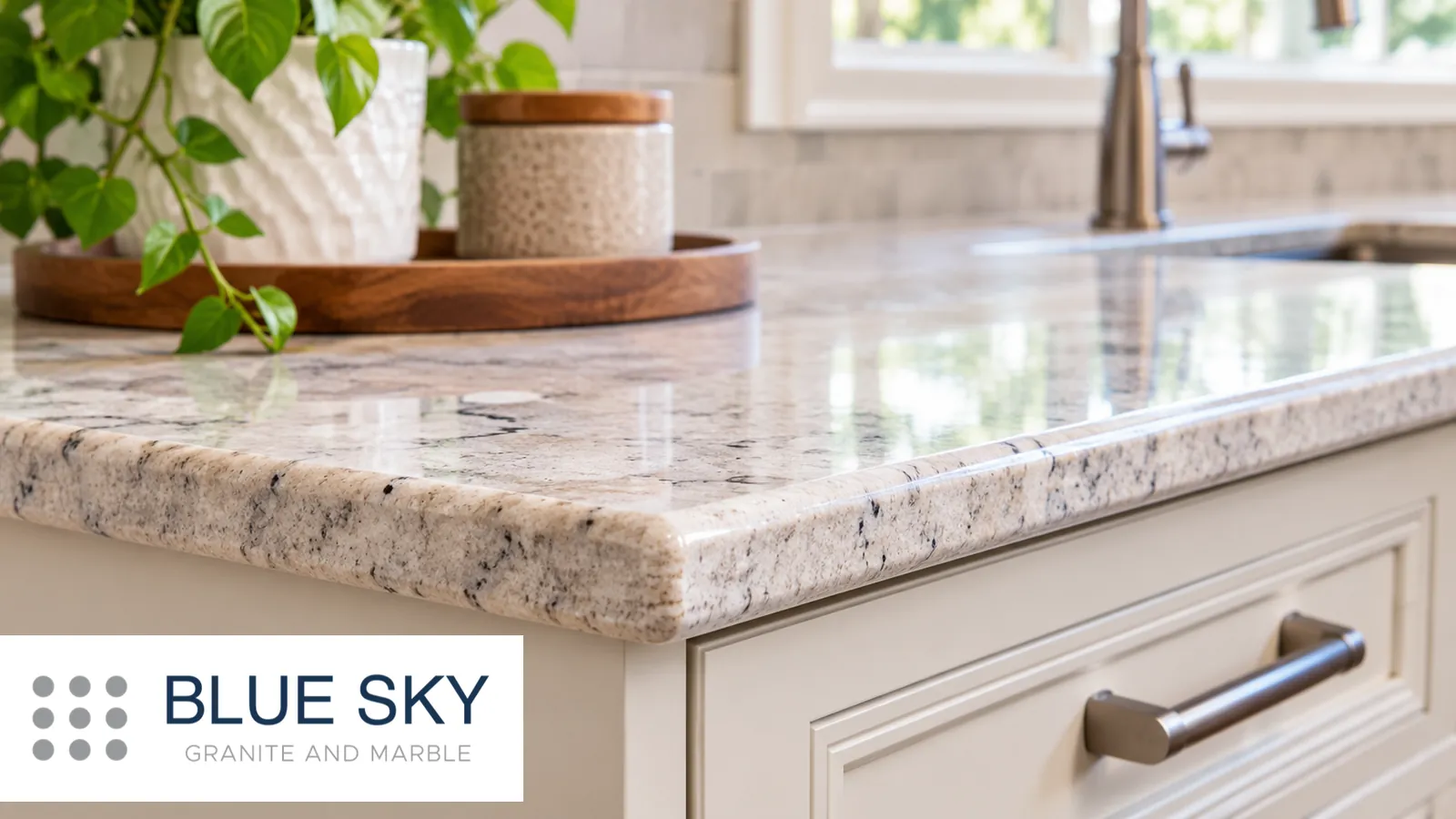
Names such as eased, beveled, or rounded describe general shapes, but the exact dimensions and appearance can vary by fabricator and material. Request a physical sample or a clear profile diagram from the provider doing the work. Close-up photos can emphasize details that are less noticeable when viewed from across the room.
Review the sample from above and from the side. Note whether a shadow line makes the edge look thick, whether a bevel changes how the top catches light, and how the shape meets the cabinet below. Confirm the profile is an available option for the selected material and thickness. You can also compare those samples with Blue Sky’s countertop edge profiles.
Consider exposed corners and busy areas
Kitchen islands, peninsula ends, and narrow circulation paths bring people close to countertop corners. A slightly rounded edge can feel different from a sharp, angular profile, but no edge design eliminates the risk of impact or substitutes for adequate clearance. Discuss the desired corner treatment with the fabricator.
If the counter is near a doorway or seating area, consider how people, bags, and chairs will move around it. The shape can influence comfort, but the countertop’s dimensions and circulation space still matter more than decorative details alone.
Understand thickness and built-up appearances
A countertop may look thicker because of its material thickness, a fabricated edge treatment, or another construction detail. A photograph alone cannot confirm how a thicker-looking edge was fabricated. Ask how the proposed appearance is achieved on your selected surface, what joins might be visible, and whether any special support or fabrication considerations apply.
An edge treatment that works on one slab may not be practical on another. Veining, laminated details, and available stock influence what the fabricator can do. Confirm the achievable profile, thickness, and fabrication details before approving a reference photo as the final design.
Plan for cleaning and maintenance
Edges collect the same everyday cooking and cleaning exposure as the rest of the countertop. Request care guidance suitable for the exact surface and finish. Wipe spills promptly and avoid harsh or abrasive products unless the manufacturer or stone professional confirms they are suitable.
When reviewing a selection, ask how seams meet the chosen profile and what the finished edge will look like near sinks, cooktops, and ends. Blue Sky’s portfolio of completed surfaces offers visual examples to discuss, and its frequently asked questions can help you prepare for the countertop process. Choose an edge profile that complements the room and feels comfortable in everyday use. Ask Blue Sky Granite & Marble to review sample profiles, material thickness, corner treatments, and fabrication options before finalizing your countertop selection.
When you are ready to approve that selection, see how to approve a countertop edge profile before templating.